
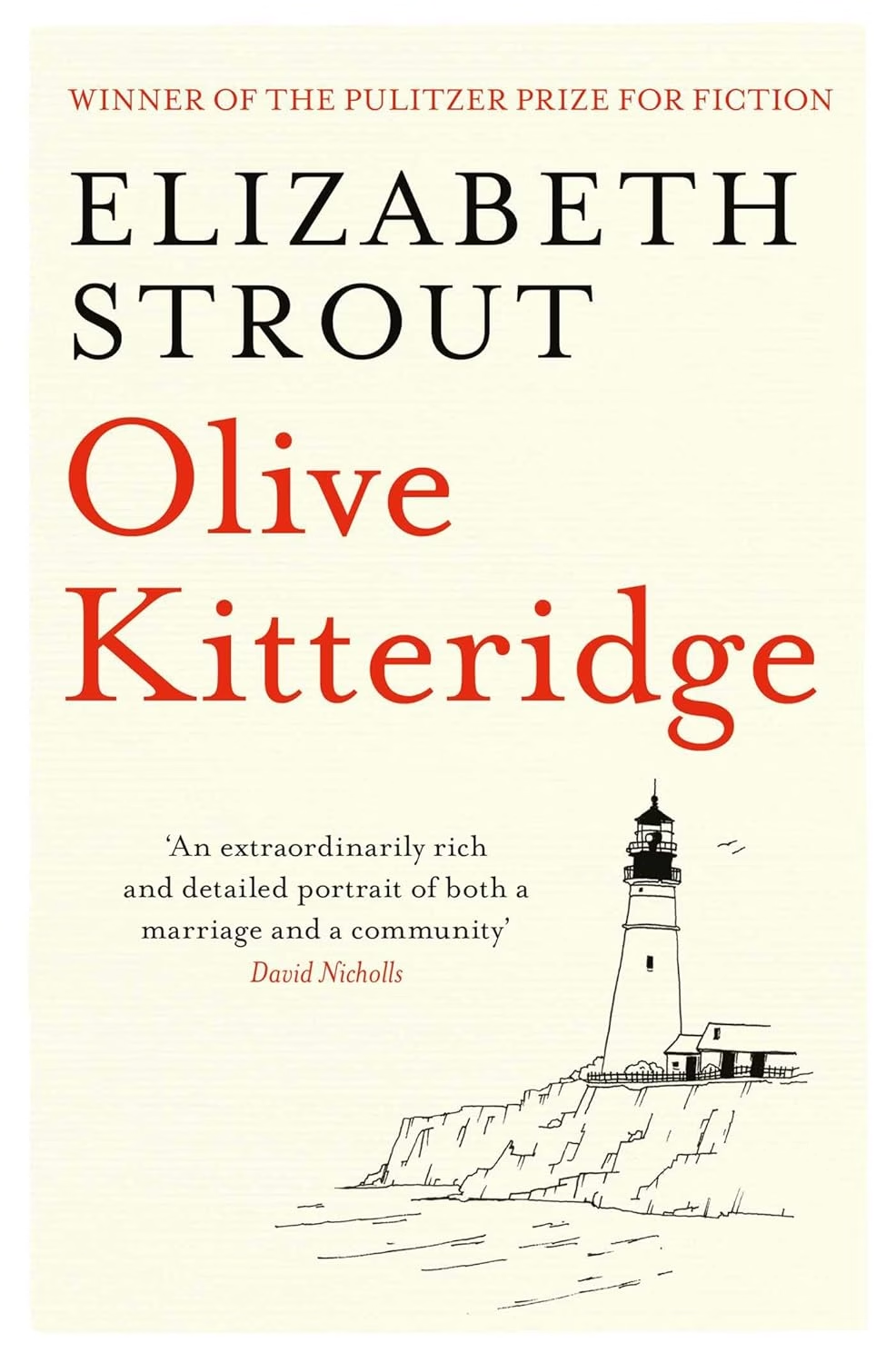
Our book group choice for June 2026 is Olive Kitteridge by Elizabeth Strout. Strout’s novel is a formally innovative composite novel that utilises a mosaic structure to interrogate the complexities of human isolation, provincial insularity and the fraught nature of empathy.
Set in the coastal enclave of Crosby, Maine, the narrative comprises thirteen interconnected short stories. While Olive Kitteridge—a retired mathematics teacher known for her abrasive disposition, fierce intellect, and uncompromising bluntness—serves as the psychological anchor of the collection, she is not always the central protagonist. Instead, Strout shifts perspectives fluidly, positioning Olive variously as a dominant actor, a peripheral observer, or a catalyst in the lives of her fellow townsfolk.
Through this decentralised narrative architecture, Strout conducts a rigorous psychological excavation of a community grappling with latent trauma, depression, and the quietly devastating transitions of aging. Olive herself embodies a profound paradox: her external misanthropy and refusal of social pleasantries mask an acute, visceral susceptibility to the suffering of others. The text maps her complex domestic dynamics—most notably her strained marriage to the pathologically gentle pharmacist, Henry, and her alienation from her son, Christopher—against broader communal struggles with grief, infidelity, and existential despair.
Olive Kitteridge avoids the sentimental trappings of traditional redemptive arcs. Rather than charting a neat trajectory of moral optimisation, the novel functions as an elegiac study of psychological endurance. Strout employs a stark, unembellished realism to capture the friction generated when deeply compromised individuals attempt to achieve meaningful connection. Ultimately, the work stands as a seminal examination of late-life reckoning, demonstrating that self-knowledge and grace are not fixed destinations, but erratic, hard-won concessions wrested from the inevitable decline of the self and its social world.
Discussion Questions
- Did you enjoy the book?
- To what extent is Olive a sympathetic character? Did you like her? Does your view change through the book?
- How does the book structure affect your understanding of a) Olive and b) the other inhabitants of Crosby, Maine?
- What does the book suggest about loneliness and human connection?
- Which relationships feel genuine or meaningful, and why?
- Does the novel offer hope? Or is it ultimately pessimistic?
- How are marriage and long-term relationships portrayed – Olive and Henry’s in particular?
- What does the book suggest about compromise, loyalty and emotional intimacy over time?
- How does the small-town setting influence the charcters’ lives and identities?
- What role does ageing and mortality play in the novel?
- How do characters respond to getting older, losing loved ones, or confronting their own limitations?
- Does Olive’s perspective on life change over time as she ages?
Individual Ratings
Catherine's Rating 
Sue's Rating
DKB's Rating
Anthony's Rating 
Baljit's Rating
Kelby's Rating
Hayley's Rating 