
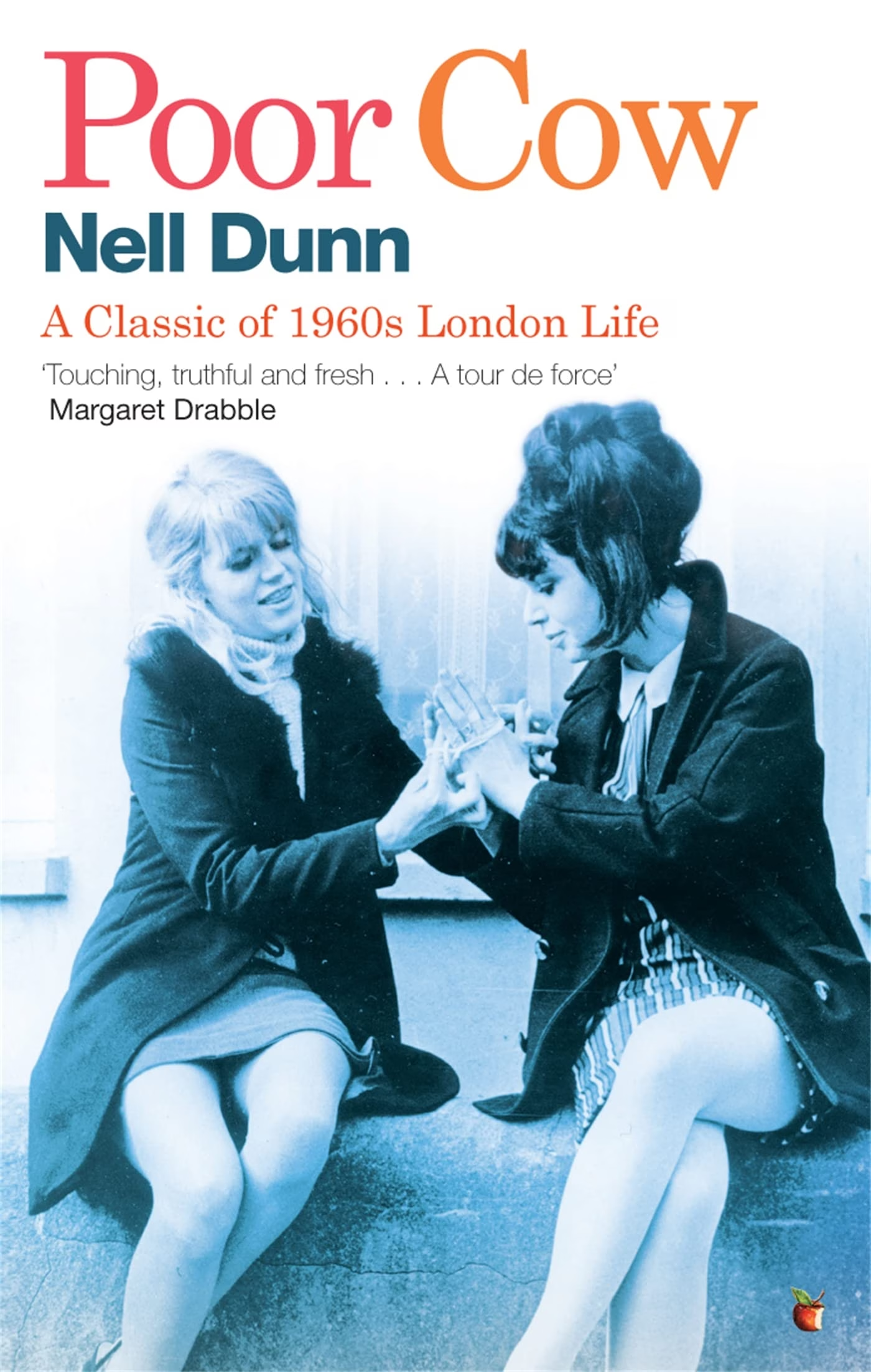
Our book group choice for November 2025 is Poor Cow by Nell Dunn. Poor Cow offers a raw, unsentimental portrait of Joy, a working-class young woman struggling to survive in the impoverished corners of Swinging Sixties London. The narrative is told largely through Joy’s vibrant, ungrammatical, first-person voice, interspersed with third-person commentary and her badly-spelt letters from prison, giving the book a gritty authenticity.
At just 22, Joy is married to Tom, a petty thief, and has a baby son, Jonny. The novel opens by showing a brief, false sense of luxury when Tom’s successful crime spree allows them to move to a flat in Ruislip. This quickly ends when Tom is sent to prison, forcing Joy and Jonny to move back to Fulham with her eccentric, aging prostitute Auntie Emm.
Joy is a perpetual dreamer, seeking love and an escape from her circumstances. She soon starts an affair with Davey, one of Tom’s friends and a fellow petty criminal. Their brief, happy time living together in a council flat is quickly shattered when Davey is also caught and sentenced to a long term.
Left on her own once more, Joy desperately tries to make ends meet. She works as a barmaid and eventually drifts into glamour modelling and promiscuity, often for money or gifts, while writing long, loving letters to Davey vowing her fidelity. She refuses to see herself as a victim, embracing life’s opportunities as they arise, even if morally dubious. The one constant in her chaotic life is her deep, visceral love for her son, Jonny.
The novel culminates when Tom is released and Joy—out of a desire for security for Jonny—returns to him, only for the cycle of domestic abuse to begin again. The ending is ambiguous, with Joy realising her love for Jonny is her truest bond, but continuing to dream of a better life with Davey, trapped by her circumstances and impulsive nature. The novel is a powerful critique of poverty, gender roles, and the myth of Sixties freedom for the working poor.
Discussion Questions
- The term “Poor Cow” is used as a colloquialism throughout the book. Do you think the title is meant to be sympathetic, derogatory, or a bit of both? Does Joy ever see herself as a “poor cow”?
- We often see the 1960s portrayed through the lens of the King’s Road and Mary Quant. How does Joy’s experience of 1960s London challenge that glamour? Is she part of the revolution, or is it passing her by?
- Joy’s relationship with her son, Jonny, is arguably the most stable bond in the book. Discuss the scene where she takes him into her bed in the mornings—how does her “visceral” love for him contrast with her often “amoral” decisions regarding men?
- The book frequently shifts between first-person narration, third-person commentary, and badly spelt letters to Davey in prison. How did this “ungrammatical” and fragmented style affect your reading experience? Did it make Joy feel more authentic?
- Knowing that Nell Dunn came from an aristocratic background, did you feel she wrote Joy with genuine empathy, or did any part of the book feel like “poverty tourism”?
- Joy tries to take control of her life in small ways—consulting a solicitor about divorce or trying to get a driving licence—but often fails. Does she have any real agency, or is she entirely trapped by the patriarchal structures of the time?
- Joy works as a barmaid and eventually drifts into “glamour modelling” and sex work to make ends meet. Do you judge her for these choices, or do you see them as a necessary means of survival in her specific ecosystem?
- Compare the two main men in Joy’s life. Is Davey actually “better” than Tom, or is he simply a different version of the same cycle? Why does Joy keep returning to the security—however abusive—that Tom provides?
- From Fulham Broadway to the “luxury” of Ruislip, how does the geography of London and its suburbs reflect Joy’s social standing and her shifting hopes?
- The novel ends on a somewhat ambiguous note, with Joy still dreaming of a better life while trapped in her current circumstances. Is there any hope for Joy’s future, or is the book a critique of how poverty makes change impossible?
Individual Ratings
Willow's Rating 

Baljit's Rating
Hayley's Rating
Anthony's Rating 
Sue's Rating
EmmaT's Rating