
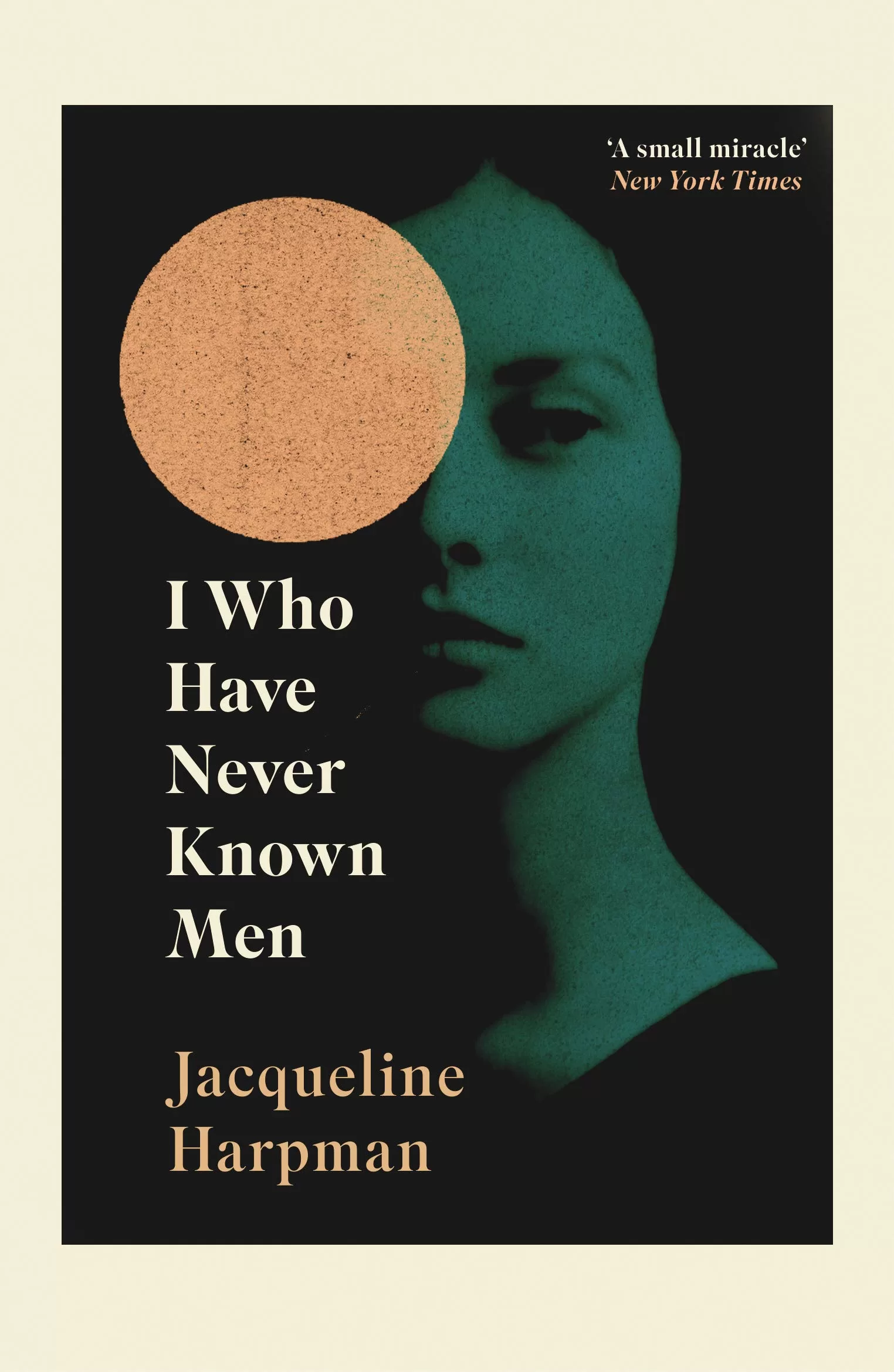
Our book group choice for July 2025 is I Who Have Never Known Men by Jacqueline Harpman. The book is a haunting and thought-provoking dystopian novel that explores themes of isolation, humanity, and the search for meaning in an absurd world.
The story begins with a group of forty women, including the unnamed narrator, held captive in an underground bunker. Their existence is one of monotonous routine, devoid of any knowledge of the outside world or their captors’ identities. The narrator, the youngest of the group, has no memory of life before the bunker, having been born there. Her unique perspective, unburdened by past experiences, allows her to observe her fellow captives with a detached yet profound curiosity.
One day, without warning or explanation, the women are released. They emerge into a desolate, post-apocalyptic landscape, utterly alone in a world seemingly devoid of other human life. As they journey across this barren expanse, they grapple with their newfound freedom, the trauma of their captivity, and the overwhelming silence of their surroundings. The narrative follows their desperate search for answers, for connection, and for any sign of the civilization that once was.
Harpman’s novel is a powerful meditation on the human condition, exploring how individuals cope with extreme circumstances and the fundamental need for purpose and understanding. It delves into the psychological impact of confinement and liberation, questioning what truly defines humanity when stripped of societal norms and familiar comforts.
Discussion Questions
- The title of the book, I Who Have Never Known Men, is a powerful statement. How does this declaration define the narrator’s identity throughout the novel? By the end of the story, has her understanding of “men” changed, and if so, what does this new understanding reveal about her own journey?.
- Harpman’s novel opens with a stark, almost clinical prose style. How does this narrative voice, devoid of personal history or emotional context, shape our understanding of the narrator’s imprisonment and her developing identity? Consider how the style itself acts as a metaphor for her existence.
- The unnamed women in the novel are an “absolute,” a group without individuality. How does the narrator’s rebellion, from her refusal to eat at a certain time to her eventual flight, break this collective identity? To what extent is her individual self forged in opposition to the group?
- The men are presented as an almost abstract, faceless force of control. Discuss the nature of this patriarchy. Is it a literal, physical domination, or does it represent something more philosophical or psychological? How does the lack of detail about the men make their power more, or less, terrifying?
- The novel has been interpreted as a feminist allegory. How does it explore themes of gender, memory, and freedom? Do you see a direct correlation between the patriarchal confinement of the women and broader societal constraints on women’s lives, or is the text more open-ended than that?
- The narrator’s relationship with the Commander is a key turning point. What does he represent to her, and how does this relationship challenge the established dynamics of the group and the prison? Is it a moment of genuine human connection, or a different kind of subjugation?
- Once free from the prison, the women find themselves in a new kind of wilderness. The narrative shifts from a story of literal confinement to one of existential freedom. How does the novel explore the idea that freedom without purpose can be as terrifying as imprisonment?
- The final image of the novel is deeply ambiguous. What do you make of the narrator’s ultimate choice and her relationship to the child she “adopts”? Does this act represent a new beginning, a final surrender, or something else entirely?
- Harpman’s work often draws comparisons to philosophical texts and existentialist literature. How does this novel engage with themes explored by writers like Camus or Sartre, particularly regarding the search for meaning in a meaningless universe?
- The narrative is punctuated by moments of intense, almost poetic, reflection on the natural world. How does Harpman use these descriptions of the landscape and the sky to contrast with the sterile environments of both the bunker and the desolate outside world?
- To whom would you recommend this book and why?
Individual Ratings
Anthony's Rating 
Catherine's Rating 
DKB's Rating
Baljit's Rating 
Kelby's Rating
Sue's Rating